

When Should You Get Your Water Tested?
How do you know if it’s time to get your water tested? The clues may not be obvious at a glance. Even the clearest glass of tap water may have microscopic contaminants that can make you and your family ill.
We tend to take for granted that the water that pours from our taps is automatically safe. And most of the time, it is! We have excellent water treatment facilities that take our cold Colorado water and purify it for daily use. There’s just one problem. There are literal miles of pipe running from your local water treatment facility to your home – and many of these pipes may not have been serviced in years. This leaves them vulnerable to contamination, either from small cracks or from deterioration, build-up or any number of problems.
Private water supplies — like rural wells throughout rural Southern Colorado — are also potential vectors for contamination. If the groundwater around the well becomes riddled with bacteria or chemicals, there is the potential for pollution to enter your drinking water. Worst of all, there’s no municipal water treatment facility to test your water and inform you if it has been compromised. You’re on your own.
The positive news is that you are not stuck drinking mystery water and hoping for the best. Third-party water testing gives you the power to monitor the safety of your drinking water after it has passed through miles of pipe — or after it leaves your well. Let’s take a look at what you can learn from water quality tests.
What is Water Testing Actually Testing for?
When your water is tested, your technician will look for several water quality indicators, including:
PH Level of Your Water
The PH level of your water is important because extreme variants can damage your pipes. For example, highly acidic water can corrode your pipes and lead to weak points and cracks that allow bacteria and chemicals to enter your drinking water.
Coliforms and Fecal Coliforms
Coliforms are microbes that come from the bodies of animals and humans. They are not harmful, but they work as an indicator that you may have more harmful contamination. Fecal coliforms are harmful and they can contaminate any system after water leaves the treatment facility. Private water systems are most vulnerable to this contamination.
Additional Contaminants
Beyond testing for the contaminants listed above, a professional test for water quality may also search for:
- Lead
- Metal
- Minerals (water hardness test)
- VOCs
- Fertilizers
- Pesticides
- Arsenic
Serious Water Contamination Threats
Colorado is home to some unique water contamination threats. For example, did you know Cañon City is located next to a radioactive superfund site? Or that Rocky Ford has the highest rates of radium contamination in the nation? The Centennial State definitely struggles with water quality! Depending on where you live and how your water is treated, you could have potential issues, too. Here are some of the serious contamination threats testing can detect. 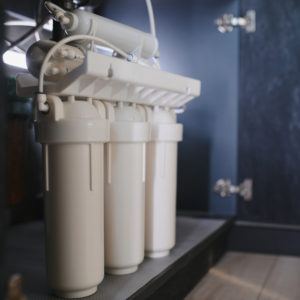
- Radon: Radon is a common problem in Colorado. It is highly recommended that buyers complete radon testing before purchasing a home. If your home has radon mitigation in place, you should have your water tested regularly. You can also use aeration or granular activated carbon for radon mitigation in your water supply.
- Radium: Radium is a real concern for our rural communities, especially those south of Pueblo. Rocky Ford, La Junta, Swink — Otero County — are at some of the highest levels in the nation. One report noted that one in every six Otero County homes has tap water above the legal limit for radium.
- Uranium: Colorado has natural uranium deposits and a long history of uranium mining. The superfund site in Cañon City is not the only area where contamination could impact water quality. Contamination has been found in the groundwater in the Arkansas River Valley.
- PFCs: PFCs are not extensively tested for in water treatment and this test may have additional fees. If PFs are your leading concern, you may want to consider skipping expansive testing that can still miss forever chemicals. We often recommend an advanced reverse osmosis filtration system for customers concerned with forever chemicals, as they have a 94%-98% success rate.
When Should You Have Your Water Tested? How Often?
Colorado Springs Utilities recommends that private well owners test their wells at least once a year. Residents on municipal water can follow a similar schedule. Both types of water users should test their water after natural disasters like flooding, or under the advisement of their county health department. You may also with to test your water if:
You suspect you have lead contamination.
Water treatment facilities cannot screen for lead contamination caused by your household plumbing system. Lead can be picked up in older pipes, through small leaks in the system or, in the case of well water, through groundwater contamination. If you have older pipes, live in an older neighborhood or suspect contamination in your yard, a lead water test is critical.
You want to test for PFCs/forever chemicals.
Water treatment facilities do not typically test for PFCs and are not required to do so. PFCs remain in the body for years and they are linked to medical issues and chronic conditions. It is worth noting that a reverse osmosis filter costs the same as a PFC test, so it may be more cost effective to just install a point of use filter instead of waiting for testing results.
Your water has an odd taste or odor.
Smelly water indicates the presence of gas/bacteria in your water. Public water may smell of chlorine or taste like swimming pool water. While the smell may not be associated with dangerous contamination, it does impact the quality of the water if you can’t stand the taste or smell.
You have stains, calcification, clogged water pipes or build-up on faucets.
These indicators show a need for a hard water test, as this type of build-up is typically caused by an overabundance of minerals.
You have elderly residents, sick family members, small pets or young children/babies.
Contaminants can have a negative impact on more vulnerable immune systems. If you have an immunocompromised family member, a drinking water quality report can help you protect them from hazards that are harmful to their health.
Your home has radon.
Radon is extremely common in Colorado. It is a localized problem that municipal water samples would be unable to detect at the treatment facility. If your home utilizes radon mitigation, you should absolutely get your water tested.
You live in a radium or uranium “hotspot.”
It can be difficult to determine if you are in a high-risk area. You can research your area, contact local environmental agenies or review government resources to determine if your area is vulnerable.
What Do I Do if My Water is Contaminated?
Has water testing revealed contamination in your drinking water? Fortunately, there are options for ensuring the water in your home is safe! Yes, even from radium and uranium. Here are some of the popular filtration methods cleaning water today:
Reverse osmosis: Removes 99% of pollutants through high pressure and a semi-permeable membrane. Can remove uranium, radium and forever chemicals like PFCs.
Sediment filters: Remove particulate matter that causes cloudy water.
Carbon filter: Remove odors and bad/foul taste. Granular activated carbon filters specifically, can reduce radon.
Water softener: Eliminates the minerals that cause build-up, weird tastes and the feeling of residue on hair and skin.
UV disinfection: Gets rid of bacteria, microorganisms and viruses.
Chlorination: Disinfection and cleaning.
We also have resources about water quality and water filtration that can help you learn more about your options.
- 4 Reasons to Install a Reverse Osmosis Filter in Your Home
- Can Water Quality in My Area Affect the Lifespan of My Appliances?
- Can a PFAS Water Filter Protect My Drinking Water?
- Water Quality & the Potable Water Distribution System
If you have other questions, give us a call directly to discuss testing and filtration options.
Test Your Water for Peace of Mind
You want to know you can rely on your family’s tap water to be safe — not hazardous to your health. Annual water testing can educate you on potential problems with your water quality at home, as well as the water quality in your area. Get your water tested and give yourself the gift of peace of mind.